Why Cosmica: the technology architecture that every Fashion company needs right now
For years, technology investment has focused on adding new capabilities: new platforms, new applications, new data sources and, more recently, new AI-powered solutions. But as the technology landscape becomes richer, another challenge is becoming increasingly difficult to ignore: how can all these technologies work together to support the way a fashion business actually operates?
Because the next challenge for Fashion is not simply adopting more technology. It is creating the conditions for technology, data and intelligence to work together, across functions, processes and markets, in a way that is flexible enough to evolve with the business.
That question matters more than ever. Fashion leaders are operating in a market shaped by volatile costs, evolving trade patterns, fragile supply chains, slower growth, fast-changing consumer expectations and an accelerating AI agenda. McKinsey describes AI as shifting “from a competitive edge to a business necessity” for the industry. In this context, technology cannot remain a collection of disconnected tools. It must become an operating foundation: one that connects the enterprise, turns fragmented data into trusted intelligence, and gives people the ability to act faster, with greater precision and control.
This is why Stealth Cosmica exists.
Fashion has outgrown fragmented technology
In Fashion&Luxury, a decision made in one part of the business can immediately affect many others. A change in demand influences forecasting, buying, production planning, raw-material sourcing, inventory allocation, logistics, pricing and margin. A new market creates commercial opportunity, but also introduces new channel, tax, fulfilment, customer-service and data-management requirements. A promotion may drive sales in the short term while creating pressure on stock availability, wholesale relationships or brand positioning.

Yet the technology environment behind those decisions is often fragmented: product information may sit in one system. Customer data in another. Inventory data in several. Pricing and competitive signals may remain disconnected from sales, planning, and financial information. The result is not a lack of data. It is a lack of shared context. This gap becomes increasingly expensive when the business must react quickly. When demand changes, when supply constraints emerge, or when a market opportunity appears, a decision based on partial information can lead to excess inventory, missed availability, unnecessary markdowns, avoidable operational costs, or pressure on margins.
The answer is not simply to purchase more software. It is to create an architecture in which data, processes, applications, and intelligence can operate together.
The limits of the monolithic Fashion ERP
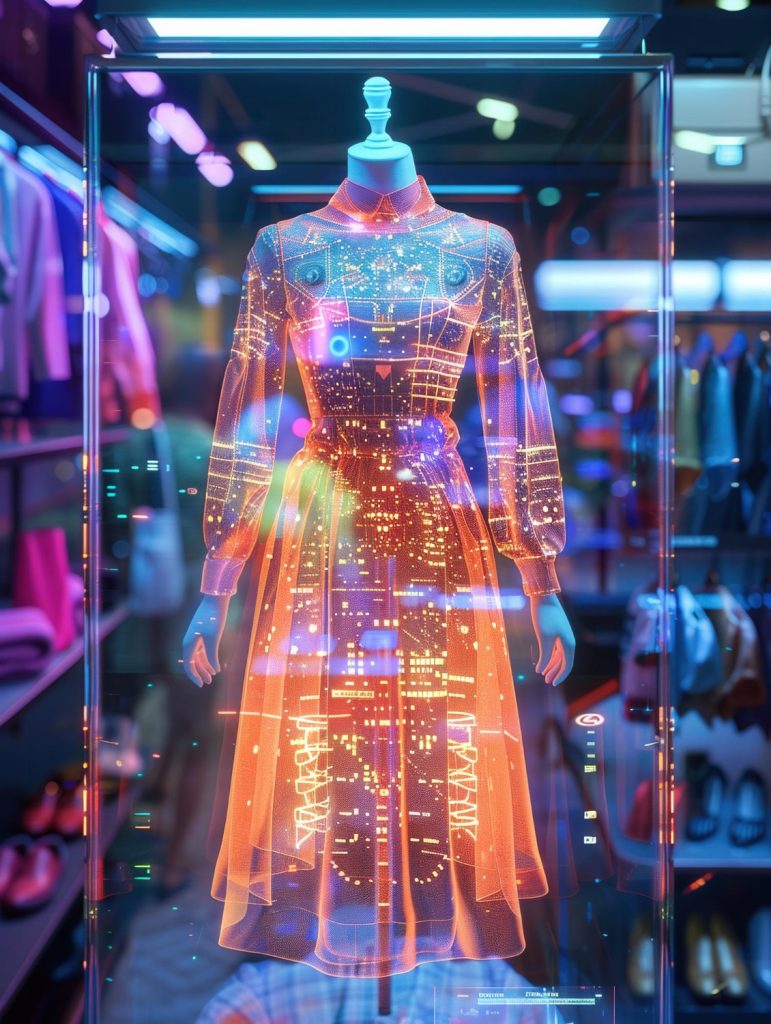
For decades, Fashion ERP systems have provided the backbone of enterprise control.
They standardise critical operations, manage transactions and maintain authoritative records across areas such as product, purchasing, production, inventory, orders and finance. This role remains essential. Fashion businesses need a trusted operational core: a secure, governed environment that provides consistency across the processes on which the enterprise depends.
But control alone is no longer enough.
Traditional monolithic architectures can struggle when the business needs to adapt quickly. New channels, product categories, markets, partners and customer expectations can demand capabilities that were not anticipated when the original system was designed. Every change can become a lengthy implementation programme. Every customisation can increase technical debt. Every new point solution can introduce another integration to maintain.
At the other extreme lies the fragmented technology stack: a growing collection of specialised applications, each solving a local requirement but potentially creating duplicated data, disconnected workflows and inconsistent business logic across the organisation.
Fashion does not need to choose between rigidity and fragmentation.
It needs a different model: a stable and trusted ERP core for Fashion&Luxury combined with modular capabilities that can be integrated, extended and evolved as the business changes. Gartner identifies AI, automation, and composable architectures as key forces transforming cloud ERP for product-centric enterprises.
This is the technology principle behind Stealth Cosmica.
A composable core for fashion & luxury

Stealth Cosmica is designed as a cloud-native, composable and AI-ready ERP platform for fashion and luxury. Composable does not mean uncontrolled customisation. It means enabling the business to assemble the capabilities it needs around a coherent, governed foundation. It means preserving what must remain consistent: core data, critical processes, enterprise rules, security and compliance, while creating room to integrate specialised services, new applications, advanced analytics and AI-driven workflows.
This approach matters because no two fashion companies operate in exactly the same way.

A vertically integrated luxury house, a global wholesale-led brand, a digitally native fashion company and an omnichannel retailer may share operational challenges, but they have different product calendars, supplier ecosystems, market footprints, channel strategies and growth priorities. A technology platform should not force them into a single fixed model.
It should give them the ability to compose their own operating environment: connecting existing investments where they create value, adding new capabilities where opportunities arise, and maintaining the control required to scale globally.
Stealth Cosmica is positioned as a platform in which technology becomes strategy, allowing fashion businesses to evolve their operations and technology landscape without treating transformation as a cycle of costly replacement programmes.
The principle is straightforward:
- Keep the operational core reliable.
- Make enterprise capabilities modular.
- Connect systems through interoperable services and APIs.
- Treat data as a shared business asset.
- Build AI on top of trusted data and governed processes.
This is not technology for its own sake. It is the architecture required to make change manageable.
Data as the foundation of Intelligence

AI, automation and advanced analytics are now central to the enterprise technology agenda. But they can only produce reliable value if the data beneath them is consistent, governed and connected to real business processes. A sophisticated model cannot compensate for incomplete product information, duplicated customer records, disconnected inventory data or inconsistent commercial strategies across regions and channels.
This is why data architecture has become a strategic issue. Stealth Cosmica can collect, standardise and enrich structured and unstructured information from ERP, CRM, PLM, e-commerce and marketplace systems, creating a unified data foundation for reporting, business intelligence, AI and machine-learning initiatives.
For business leaders, this translates into a practical advantage: data from different functions can be interpreted together. A merchandising team can analyse product and demand signals alongside available stock. A supply-chain team can connect operational risk with commercial priorities. A finance team can relate margin performance to pricing, allocation and inventory conditions. An e-commerce team can use timely and consistent information to react to shifts in market demand.
The goal is not to create one enormous repository of information. It is to create a reliable common language for the enterprise.
From system of record to system of intelligence
The Fashion ERP of the future will remain a system of record. However, it will also need to become part of a broader system of intelligence.
That evolution does not happen by simply adding a generative AI interface above existing workflows. AI must be integrated into the operating environment: connected to trusted data, aware of enterprise context and governed by clear rules. McKinsey highlights that fashion brands are already deploying AI across online customer service, content and image creation, consumer search and product discovery. It also identifies AI agents and automation as becoming increasingly central to the way the industry creates

This is where the distinction between “AI-enabled” and “AI-ready” becomes important.
AI-enabled can mean that an application includes a new feature. AI-ready means that the enterprise has created the technological and organisational conditions for AI to operate reliably: accessible and governed data, interoperable systems, appropriate permissions, monitoring, clear decision boundaries and human oversight.
Gartner forecasts that AI-enabled solutions will represent 62% of cloud ERP spending by 2027, compared with 14% previously, indicating that embedded intelligence is moving rapidly into the enterprise application landscape. Gartner also predicts that embedded AI in cloud ERP applications could contribute to a 30% faster financial close by 2028.
The implication for fashion leaders is clear: AI will increasingly become part of core enterprise workflows. The strategic question is whether the underlying architecture is ready to support it.
Why Cosmica?
The name draws inspiration from the Greek concept of kosmos: not simply the universe, but an ordered system in which different elements are connected and work together as a whole.
This is the idea at the heart of Stealth Cosmica. Not just another Fashion ERP, but a fashion technology ecosystem in which systems, data, capabilities, and intelligence are not isolated elements, but connected parts of a greater whole. An architecture designed to bring order to complexity, create coherence across the enterprise, and continuously evolve as the business does. A solution that can protect the integrity of its core operations while continuously extending the capabilities around them. It can connect data without losing control. It can prepare for AI without treating intelligence as an isolated experiment. It can evolve its technology at the same speed as its markets, collections, and ambitions
Because the future of Fashion technology is not about adding more tools. It is about creating a system in which everything can connect, adapt, and become more intelligent over time.
That is why Stealth Cosmica.